Watercolor Hot Air Balloon Invitation Review
As a designer who bridges the gap between digital assets and tangible textiles, I often evaluate print templates through the lens of needle and thread. When I first opened the Watercolor Hot Air Balloon Invitation file, my immediate thought wasn't about paper stock or ink saturation; it was about how this whimsical aesthetic would translate into a machine embroidery design. For fellow Etsy sellers, apparel decorators, and makers, understanding this crossover is vital. We aren't just looking at a pretty image; we are assessing a potential finished product that needs to survive washing, wear, and customer scrutiny.
Translating Soft Aesthetics to Stitch Logic
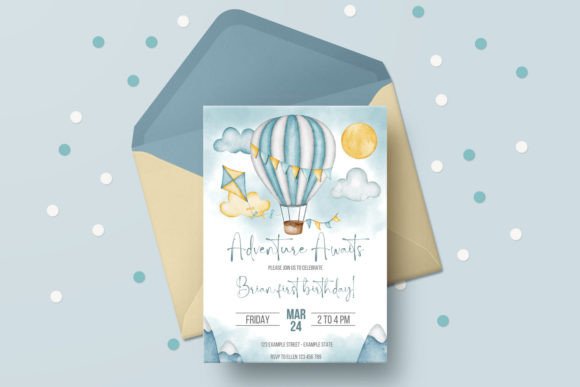
The visual personality of this Watercolor Hot Air Balloon Invitation is undeniably gentle. It evokes nostalgia, childhood wonder, and soft celebrations. However, watercolor effects are notoriously difficult to replicate in embroidery because thread has opacity and sheen that water-based pigment lacks. As I reviewed the layout, I looked for distinct separation between the balloon envelope, the basket, and the background elements. For a successful sweatshirt embroidery or baby embroidery project, the design relies heavily on how well the digitizer interpreted those soft edges.
If you are planning to use this as an applique design, the shape of the balloon offers a fantastic, forgiving outline for satin stitch borders. The rounded geometry is easier to manage on stretchy fabrics than sharp, intricate corners. However, if the original template relies on subtle color bleeds to define the balloon's panels, you must verify that the embroidery file uses adequate fill stitch variation or thread color changes to maintain that dimension. Without proper stitch density mapping, a watercolor-style graphic can easily flatten into a solid block of color, losing the very charm that makes this invitation template special.
Real-World Application: The Nursery Tote Bag Test
To truly evaluate this asset, I mentally prototyped it for a specific real-life scenario: a personalized gift tote bag intended for a new mother. This is a staple small shop product that requires durability and visual appeal. Canvas tote bags provide a stable fabric texture, which is ideal for detailed work. In this context, the Watercolor Hot Air Balloon Invitation serves as more than decoration; it acts as a branding anchor for handmade businesses specializing in nursery decor.
When stitching this onto natural canvas, I noted that the "watercolor" effect requires strategic thread selection. Standard rayon might be too shiny, making the design look plastic against the matte fabric. A matte cotton or polyester thread would better honor the original artistic intent. Furthermore, because tote bags are functional items, the stabilizer choice becomes critical. A cut-away stabilizer is non-negotiable here to prevent the hoop size from distorting the balloon’s circular shape during the stitching process. If the design includes tiny lettering typical of invitation templates, I would strongly advise testing readability first. Text smaller than 4mm often gets lost in the weave of canvas, turning a personalized gift into an illegible mess.
Navigating Fabric Limitations and Hoop Constraints
While this design shines on stable woven goods, caution is required when adapting it for custom apparel like lightweight tees or stretchy knits. The complexity inherent in mimicking a watercolor wash often results in higher stitch counts. On thin fabric, this density can cause puckering or create a "bulletproof vest" effect where the embroidered area is stiffer than the garment itself. For commercial embroidery projects targeting the children's market, comfort is paramount. You may need to request or create a low-density version of this machine embroidery design specifically for performance wear or delicate baby clothes.
Dark fabrics present another challenge. Watercolor designs typically utilize light, airy colors. Placing this on a navy sweatshirt without a white underlay base will result in muddy, darkened pastels that fail to capture the invitation's original mood. Always run a test stitch-out on your darkest intended fabric. Additionally, consider the hoop size limitations. If the invitation layout is vertical but your machine only accommodates standard square hoops, resizing can distort the aspect ratio of the balloon. Never stretch a design disproportionately; instead, rearrange the accompanying floral or cloud elements to fit your available workspace while maintaining the composition's balance.
Commercial Viability for Makers and Sellers
For creative entrepreneurs and digital product sellers, the value of this asset extends beyond a single project. As a print template, it provides cohesive branding opportunities. Imagine offering a bundled package: a printable invitation for the baby shower paired with a matching embroidered patch for the diaper bag. This consistency builds brand recognition and increases perceived value. However, before listing any finished product or digital embroidery file, you must rigorously confirm licensing terms. Just because a design is beautiful does not mean it is cleared for commercial embroidery or resale as a digital asset.
Customer trust hinges on accurate representation. When creating printable mockups for your Etsy listings, ensure the digital preview matches what the needle actually produces. If the physical stitch-out has a textured, segmented look due to fill stitches, do not use a flat vector graphic as your primary listing photo. Buyers expect the handmade product to reflect the reality of thread on fabric. Honest presentation reduces returns and builds a loyal client base who appreciates the craftsmanship involved in translating a Watercolor Hot Air Balloon Invitation from screen to textile.
Essential Designer Notes for Success
Before committing this design to a final project, adhere to these practical evaluation steps:
- Test on Scrap Fabric First: Never assume settings transfer perfectly between materials. Test stitch density and tension on a swatch identical to your final project.
- Verify Thread Color Contrast: Watercolor palettes can be low-contrast. Ensure adjacent thread colors have enough differentiation to be visible after stitching.
- Inspect Small Details: Zoom in on the embroidery file. If the invitation includes fine lines or micro-text, determine if they are running stitches or merely printed details. Running stitches under 2mm may break or disappear.
- Evaluate Stabilizer Needs: Match your backing to the fabric weight. Use tear-away for stable wovens and cut-away for knits to preserve the design's integrity over time.
- Check Licensing Thoroughly: Confirm whether the license covers physical sales, digital file redistribution, or both. Protect your craft business by respecting intellectual property.
- Mockup Reality Check: Compare light and dark fabric backgrounds in your planning phase. Determine if a white underlay is necessary for color fidelity.
Ultimately, the Watercolor Hot Air Balloon Invitation is a versatile asset that bridges digital design and tactile craft. Whether you are producing holiday embroidery for seasonal markets or creating bespoke nursery decor, success lies in respecting the technical constraints of the medium. By approaching this template with a critical, maker-focused eye, you transform a simple digital file into a high-value, professional-grade embroidered product that delights customers and stands the test of use.